

Captain Cooks casino Plinko
Introduction
When I assess a casino title for Canadian players, I usually start with a simple question: does the format offer real gameplay value, or is it only riding on visibility and streaming appeal? In the case of Captain cooks casino Plinko, the answer is more nuanced than many newcomers expect. On the surface, Plinko looks almost too simple to deserve a serious breakdown. A ball drops, bounces off pegs, and lands in a payout slot. That is the whole visual idea. But once I look at how the odds are distributed, how risk settings reshape the session, and how quickly results arrive, it becomes clear why this format holds attention.
For players in Canada, Plinko often stands out because it removes much of the decorative layer seen in video slots and leaves the core gambling loop exposed. There are no reels, no paylines, and usually no best Captain Cooks Casino bonus deals for real money players rounds in the traditional sense. Instead, the attraction comes from direct cause and effect: choose a stake, set a board, select a risk profile, release the ball, and see the outcome within seconds. That stripped-down structure is exactly what makes the game easy to enter and surprisingly easy to underestimate.
In this article, I will focus strictly on the Plinko experience as it relates to Captain cooks casino, not on the broader casino platform. My goal is practical: explain how Plinko works, why it feels different from slots and other casino games, where the real tension comes from, and what a player should understand before deciding whether this format is actually a good fit.
What Plinko Is and Why It Draws So Much Attention
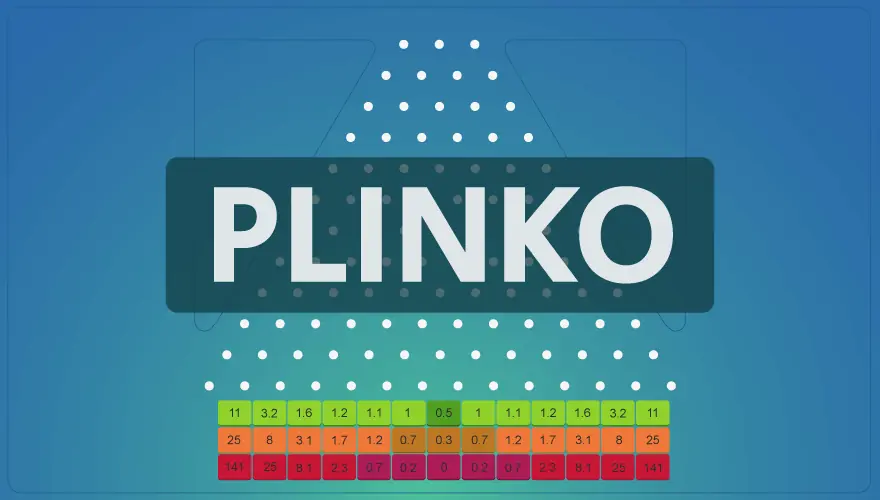
Plinko is a chance-based casino game built around a vertical board filled with pins or pegs. A ball is dropped from the top and changes direction repeatedly as it hits the obstacles on the way down. At the bottom of the board, there are payout zones with different multipliers. The final multiplier determines the result of the round.
That description sounds almost mechanical, and in a way it is. Yet the reason Plinko became so noticeable is that it combines three things players respond to immediately:
- Instant readability. Even a first-time player understands the basic objective in seconds.
- Visible randomness. The path of the ball creates a strong feeling of suspense because the result is seen unfolding, not simply revealed.
- Flexible risk structure. The same game can feel mild, balanced, or highly aggressive depending on the selected setup.
This is where many players make their first mistake. Because the interface is minimal, they assume the experience is casual and low-pressure. In reality, Plinko can shift from a light, repetitive rhythm to a very sharp high-variance session with only a few setting changes. The simplicity is visual, not strategic.
One of the more interesting things I have observed about Plinko is that it creates tension without needing a narrative wrapper. Slots often rely on themes, symbols, and bonus anticipation. Plinko does not need any of that. The suspense comes from watching probability turn into a visible path. That is a very different kind of engagement, and for some players it feels more honest because the round is not hidden behind animation layers.
How the Plinko Mechanism Actually Works in Practice
At Captain cooks casino Plinko, the core structure follows the familiar model used in this category. A player chooses a bet amount, often adjusts the number of rows on the board, selects a risk level, and then drops one or more balls. Each collision with a peg sends the ball left or right until it reaches a multiplier slot at the bottom.
In practical terms, the board is not just a visual element. It defines the shape of probability. The central slots are usually easier to hit and therefore tend to carry lower multipliers. The edge slots are harder to reach and usually hold the largest returns. This creates a distribution where small and medium outcomes appear more often, while the headline multipliers are rare by design.
The movement itself may look organic, but the important point for players is this: the apparent path is part of a mathematically controlled outcome structure. That does not make the experience fake; it means the animation expresses a probability model rather than a skill-based process. Watching the ball bounce can feel like influence is possible, especially when players choose a drop point, but the actual result remains governed by chance.
Here is a practical breakdown of the main variables:
| Element | What It Changes | Why It Matters to the Player |
|---|---|---|
| Bet size | The monetary value of each drop | Directly affects bankroll pressure and session length |
| Rows | The depth of the board and payout spread | More rows usually mean wider outcome dispersion |
| Risk level | The balance between common low multipliers and rare high ones | Changes the entire feel of the session |
| Auto-play or multi-drop | How quickly rounds are executed | Can accelerate losses as easily as it speeds up volume |
The most important variable is usually the risk setting. On lower risk, the board tends to produce a tighter payout distribution. That means more frequent modest results and fewer dramatic spikes. On higher risk, the center becomes less forgiving relative to the top-end potential, and the session can become much more uneven. A player may see many low returns or misses before a strong multiplier appears.
This is why I never describe Plinko as “just a drop game.” The board may look static, but the selected configuration changes the underlying experience in a meaningful way.
Where the Game’s Appeal Comes From and How the Session Tempo Feels
Plinko is built for speed. A single round is resolved almost immediately, and that has a strong effect on how the session feels. Compared with many slots, there is less downtime between decision and outcome. You are not waiting for reels to stop, bonus symbols to tease, or feature rounds to build. The cycle is short, clean, and repeatable.
That fast loop is one of the game’s strongest assets, but it is also one of its pressure points. A short round duration means players can go through a large number of bets quickly, especially if they use auto mode. In a low-stakes session, that can feel smooth and controlled. In a poorly managed session, it can drain a bankroll faster than expected because the rhythm encourages repetition. If bonuses are what you care about, Aviator crash game guide breaks down every offer currently running.
The interest is also psychological. Plinko creates a very specific form of anticipation: not “will I trigger a feature?” but “where will this ball finish?” Those are different emotional curves. Slots often create delayed expectation. Plinko creates immediate suspense. The difference matters because it attracts a different player mindset.
One memorable observation I would make here is that Plinko often feels calmer to the eye than it is to the wallet. The board is clean, the animation is simple, and the interface usually looks almost casual. But the financial rhythm can be sharp because each outcome arrives so quickly. That contrast is part of the game’s identity.
Another point worth noting is that Plinko gives the illusion of near-misses in a very visual way. Watching the ball bounce close to a premium multiplier and then fall inward can feel more personal than missing a bonus symbol on a reel. It is still random, but the visual journey makes the miss feel tangible. For some players, that increases excitement. For others, it becomes frustrating faster than in a slot environment.
How Risky Plinko Really Is and Who It Tends to Suit
If I had to summarize Plinko’s risk profile in one sentence, I would say this: it is a format that can be adjusted from relatively steady to highly volatile, but it never stops being a chance-driven game with uneven outcomes. That is the baseline every player should accept before starting.
At lower settings, Plinko may appeal to players who want frequent action without chasing oversized multipliers on every drop. The returns are still random, but the session often feels more stable. At higher settings, the game becomes much more swing-heavy. You may spend a long stretch collecting weak results while effectively aiming for a rare top hit to rebalance the session.
This leads to a practical rule for Canadian players trying Captain cooks casino Plinko for the first time: the risk setting is not a cosmetic option. It is the main lens through which the whole game should be understood.
Plinko tends to suit players who:
- Prefer short rounds and direct outcomes.
- Enjoy visible randomness rather than layered slot features.
- Are comfortable managing bankroll discipline in a fast session.
- Want a format where configuration matters more than theme.
It may be a weaker fit for players who mainly enjoy long-form bonus rounds, symbol collection, expanding features, or story-driven slot progression. If a player wants a rich audiovisual package and evolving feature logic, Plinko can feel too bare. If a player wants immediate action and a cleaner mathematical structure, it can feel refreshingly efficient.
What Players Should Understand About Odds, Distribution, and Real Outcomes
One of the biggest misconceptions around Plinko is that because you can watch the ball move, the result somehow feels more interpretable than in other casino formats. In reality, the important part is not the bounce pattern itself but the payout distribution built into the board.
Most Plinko boards are structured so that the center receives the highest traffic. That is simply how repeated left-right branching tends to behave. As a result, lower or moderate multipliers often cluster around the middle, while the highest multipliers sit at the edges where the ball lands less often. This means the game naturally produces many ordinary outcomes and only occasional standout results.
The practical takeaway is straightforward:
| Player Expectation | What Usually Happens in Reality |
|---|---|
| “I can aim for the big multiplier regularly” | Top-end slots are rare and should be treated as exceptional outcomes |
| “Low risk means I cannot lose much” | Lower risk reduces swings, but repeated play still creates cumulative exposure |
| “Fast rounds make it easier to stay in control” | Fast rounds can weaken control if stake size and session limits are ignored |
| “The ball almost reached the edge, so it may happen soon” | Near-misses do not predict future results |
Plinko does not reward pattern reading in the way some players imagine. This is where discipline matters more than intuition. A sequence of central landings does not mean an edge result is “due. ” Likewise, a strong multiplier early in the session does not signal a hot run. The board is excellent at creating emotional narratives, but those narratives should not be confused with predictive value.
A third observation that separates Plinko from many standard casino experiences is this: the game teaches variance visually. You do not just see the result number; you watch probability drift away from the outcome you wanted. That makes bankroll swings feel more immediate and, in some cases, more memorable. Those comparing loyalty perks can weigh this section against roulette review for Canadian players.
How Plinko Differs From Slots and Other Common Casino Formats
The easiest comparison is with online slots, because that is where most players come from. Slots are usually built around reels, symbol combinations, return structure, and feature triggers. Plinko removes nearly all of that and reduces the experience to a single probabilistic event per round.
That difference affects several aspects of play:
First, the source of excitement is different. In slots, excitement often builds around scatter symbols, best Captain Cooks Casino free spins, multipliers inside features, or expanding reels. In Plinko, the excitement is concentrated into the descent itself and the final landing position.
Second, the session flow is more transparent. You are not waiting for a hidden feature cycle or evaluating symbol value tables every few minutes. The board shows the payout map directly. That transparency is one reason some players trust the format more instinctively, even though the outcomes remain random.
Third, player fatigue can arrive differently. A slot can sustain interest through changing visuals and bonus variation. Plinko relies on repetition. If the player enjoys pure probability and short-form suspense, that repetition works. If not, the format can feel thin after a while.
Compared with roulette, Captain Cooks Casino crash games, or dice-style products, Plinko sits somewhere in the middle. It is more visual than dice, less strategic-looking than roulette, and usually less socially performative than crash. It offers a compact, individual experience with immediate results and adjustable aggression.
Practical Advantages and Real Limitations of the Format
No serious review of Captain cooks casino Plinko should treat the game as either flawless or shallow. Its strengths are real, but so are its limitations.
What works well in practice:
- Quick learning curve. New players can understand the structure almost instantly.
- Clear round logic. The payout map is visible, which helps players connect settings with possible outcomes.
- Flexible session style. By changing rows, stake, and risk level, the same title can feel conservative or aggressive.
- Strong suspense per second. Few casino formats create so much anticipation in such a short cycle.
Where the format is weaker:
- Limited depth over long sessions. Without feature variety, repetition becomes noticeable.
- Fast bankroll turnover. The pace can work against players who do not set limits.
- Misleading simplicity. The interface looks harmless, but the payout distribution can be punishing at higher settings.
- No real strategic edge. Configuration matters, but it does not turn chance into skill.
That last point is especially important. There is room for preference in Plinko, but not for control in the meaningful sense. A player can choose how much variance to accept. A player cannot engineer a profitable pattern through timing, drop superstition, or board reading.
What to Check Before Launching Plinko at Captain cooks casino
Before starting a session, I recommend that players make a few practical checks rather than jumping in because the board looks simple.
- Review the risk setting first. Do not treat it as a minor toggle. It defines the emotional and financial shape of the session.
- Check the multiplier spread on the board. This tells you whether the setup is centered on frequent modest returns or rare high-end outcomes.
- Set a stake that matches the game’s speed. Fast rounds magnify poor bet sizing.
- Use demo mode if available. It helps you understand rhythm and distribution without immediate bankroll pressure.
- Decide whether you want manual control or auto-play. Automation is convenient, but it reduces the natural pause between rounds.
For many players at Captaincooks casino, the most useful first step is not chasing the highest multipliers but testing how different board settings alter the session feel. That approach gives a more realistic understanding of the format than any promotional description ever will.
I would also add one simple warning: if you are the kind of player who reacts strongly to near-misses or tends to increase stakes after several weak rounds, Plinko deserves extra caution. Its visual design can make streaks feel meaningful even when they are statistically ordinary.
Final Verdict on Captain cooks casino Plinko
Captain cooks casino Plinko offers a very specific kind of casino experience: fast, stripped back, probability-driven, and visually direct. What it does well, it does very well. It gives players instant clarity, short rounds, adjustable intensity, and a level of suspense that does not depend on flashy features or elaborate themes.
Its key strength is the combination of accessibility and tension. Almost anyone can understand the board immediately, but the actual session experience can vary sharply depending on risk level, row count, and stake discipline. That is why Plinko often surprises first-time players. It looks simple, yet it can feel dramatically different from one setup to another.
The caution point is equally clear. Plinko is not a low-pressure novelty by default. The pace is fast, top-end outcomes are rare, and higher-risk configurations can produce uneven stretches that test patience and bankroll management. Players who want deep feature design or a more layered progression may find it too repetitive. Players who appreciate direct outcomes and visible randomness may find it one of the cleanest formats in the casino lobby.
My conclusion is straightforward: Plinko is worth trying if you want a concise, high-clarity gambling format where the core appeal comes from probability in motion. It is less suitable if you need variety, narrative features, or the slower build of traditional slots. In other words, Plinko does not promise everything. It offers one thing done with precision: a simple drop mechanic that can feel light, sharp, or intense depending on how you choose to play it.
FAQ
What happens during a Plinko ball drop?
A coin-style ball is released from the top and falls through the board, bouncing off pegs toward the bottom slots. Each landing zone can award a multiplier based on where the ball ends.
Is Plinko considered a high-volatility casino game?
Plinko often behaves like a higher-volatility game because results swing between small and large multipliers. Short sessions can feel unpredictable, so it helps to set a budget before starting.
What should be checked before pressing the Plinko play button?
Confirm the chosen stake amount and that the game is in the intended mode, demo or real-money. Also make sure the screen shows the correct multiplier board and that sound or controls are responsive.
What is the common beginner mistake when playing Plinko for the first time?
Many players set a stake and immediately spam multiple drops without watching the multiplier distribution shown by the board. Starting with a small stake and pausing between rounds helps avoid unintended fast spending.
What should be done if the Plinko game screen fails to load or the ball won’t drop?
Refresh the game panel and make sure pop-ups and game permissions are allowed in the browser. Clearing cache for the casino site or switching to another network can also fix stalled loading.
If Captaincooks Plinko becomes unavailable in one access route, can a different mirror or backup access help?
A working mirror can provide a fresh connection to the same online casino games. If Plinko is missing after switching, re-open the game lobby category and confirm the mode shows demo or real-money correctly before placing any stake.